
From Coastguard to Calamity: A Cornish Maritime Family
For some families, a single occupation can shape generations. In this case, research revealed a Cornish family whose lives were closely tied to the sea, with service spanning the Coastguard, Royal Navy, and merchant shipping, marked by both long service and repeated tragedy.
The Carter family of Cornwall had a well-established maritime background, with numerous members serving at sea across multiple generations.
John Dusting, who was born in late 17 was serving in what was known as the Preventative Water Guard, a revenue service tasked with combating smuggling along the coast. He was stationed in Ireland aboard a revenue cutter and remained in maritime service throughout his career.
His son, John Dusting Junior, followed a similar path. He first went to sea as a boy and later served in the Royal Navy before transferring to the Coastguard.
During the Crimean War (1853–1856), he was employed in support of the war effort, serving aboard HMS Caesar with the Royal Navy, operating in the Baltic as part of the British fleet enforcing blockades of Russian held ports.
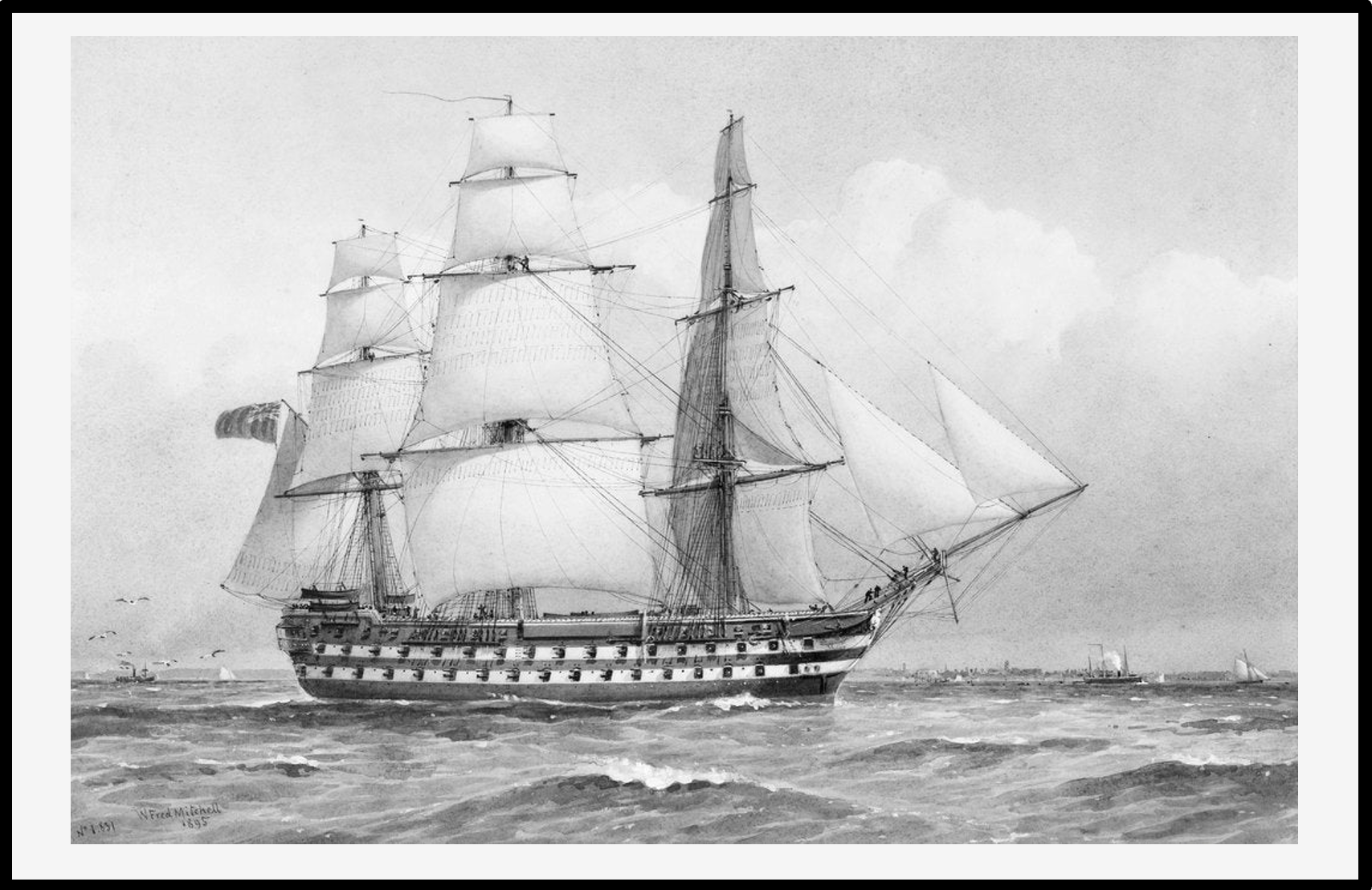
HMS Caesar at Spithead (1854), preparing to sail for Crimea
The Dusting family’s connection to the sea extended beyond naval and Coastguard service into merchant shipping.
Several members of the family served as sailors, many of them captains of coastal and international vessels, and newspaper reports from the 19th century reveal several maritime incidents, including collisions, fatal accidents, and ships lost at sea.
In one instance, a vessel under the command of a family member was badly damaged in a collision and subsequently sank, another disappeared during a storm off the Cornish coast and was officially recorded as lost with all hands, and another failed to arrive at its port of destination and was believed to have foundered in the Bay of Biscay whilst on route to Ireland.
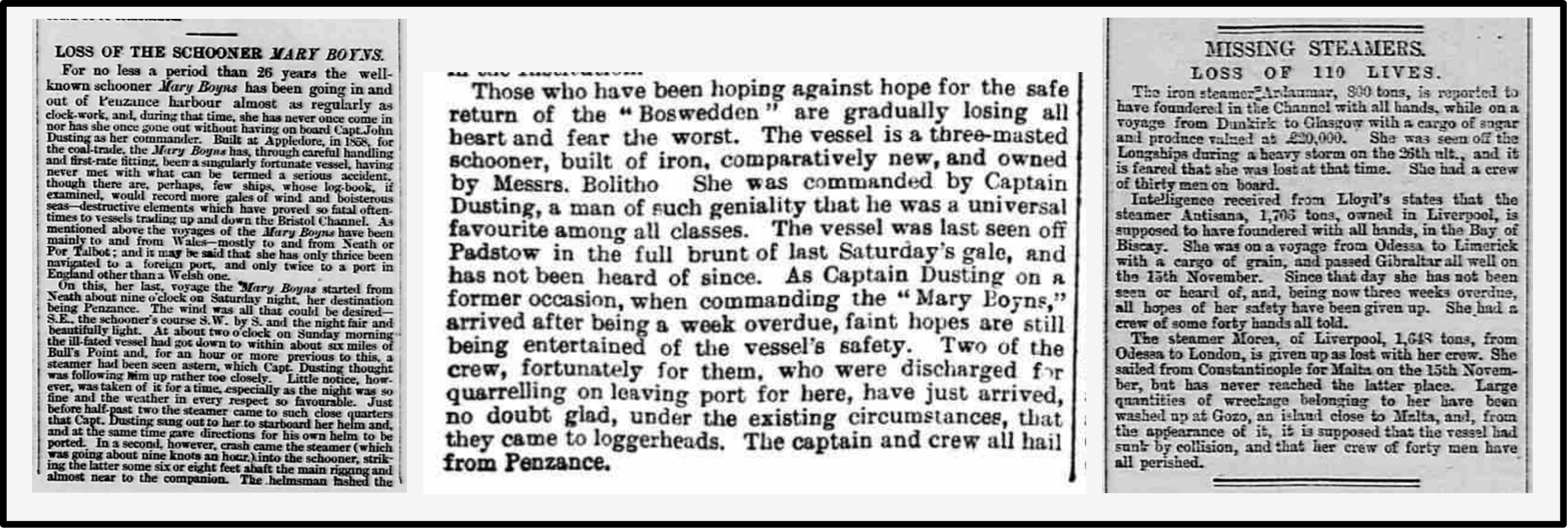
Newspaper reports relating to the sinking of the ‘Mary Boyns’, loss of the ‘Boswedden’ (Royal Cornwall Gazette 22nd October 1886), and the ‘Antisana’ (Staffordshire Sentinel 31st December 1881)
This family’s history illustrates how maritime life could shape entire generations, offering steady employment and opportunity over many years, but also exposing families to constant danger, and through historical records, including newspaper reports, it is possible to trace not only service and occupation, but also uncover the realities and risks associated with the profession and the world in which these families lived.
In case studies, some names and identifying details, where appropriate, have been altered to preserve the privacy of the families involved, while the research and historical context is entirely accurate.