
A Family Between Two Worlds: British Army Service and Irish Independence
Family history can sometimes reveal how major political and social changes affected ordinary lives. In this case, research uncovered a family whose story spans British military service, settlement in Ireland, and the upheaval surrounding Irish independence in the early 20th century.
In 1881, 15 year old John Carter was working as a page in Kensington, London. His employer, an army veteran and retired major, had served with the 4th (Queen’s Own) Light Dragoons and was present at the infamous Charge of the Light Brigade during the Crimean War, a connection that offers a glimpse into the environment in which John began his working life.
A few years later, John followed a military path of his own. In 1884 he enlisted into the 16th Queen’s Lancers, and his service took him to Ireland, where he was stationed during a period of relative stability under British rule.
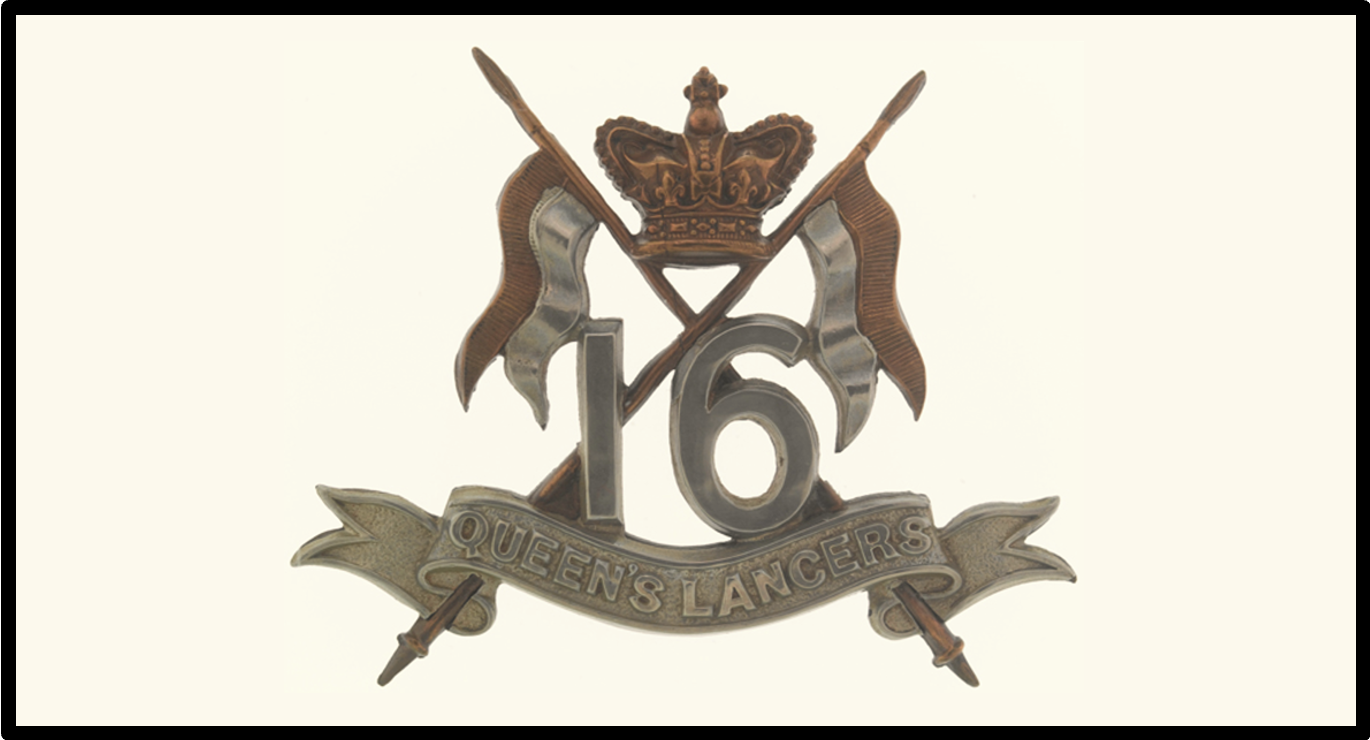
Victorian era regimental badge of the 16th Queen’s Lancers
In 1887, John married in Dublin and, after leaving the army in 1889, chose to remain there with his family, establishing roots in a country that, at the time, formed part of the United Kingdom, but baptising all of his children in the Catholic faith, at odds with his own Protestantism.
By the early 20th century, Ireland was undergoing a period of profound political change, with the Anglo-Irish Treaty of 1921 leading to the establishment of the Irish Free State in 1922, marking a significant shift in Irish governance and identity.
During this period, John’s son, George Carter, joined the newly formed Irish National Army, serving with the 2nd Battalion at Custume Barracks in Athlone.
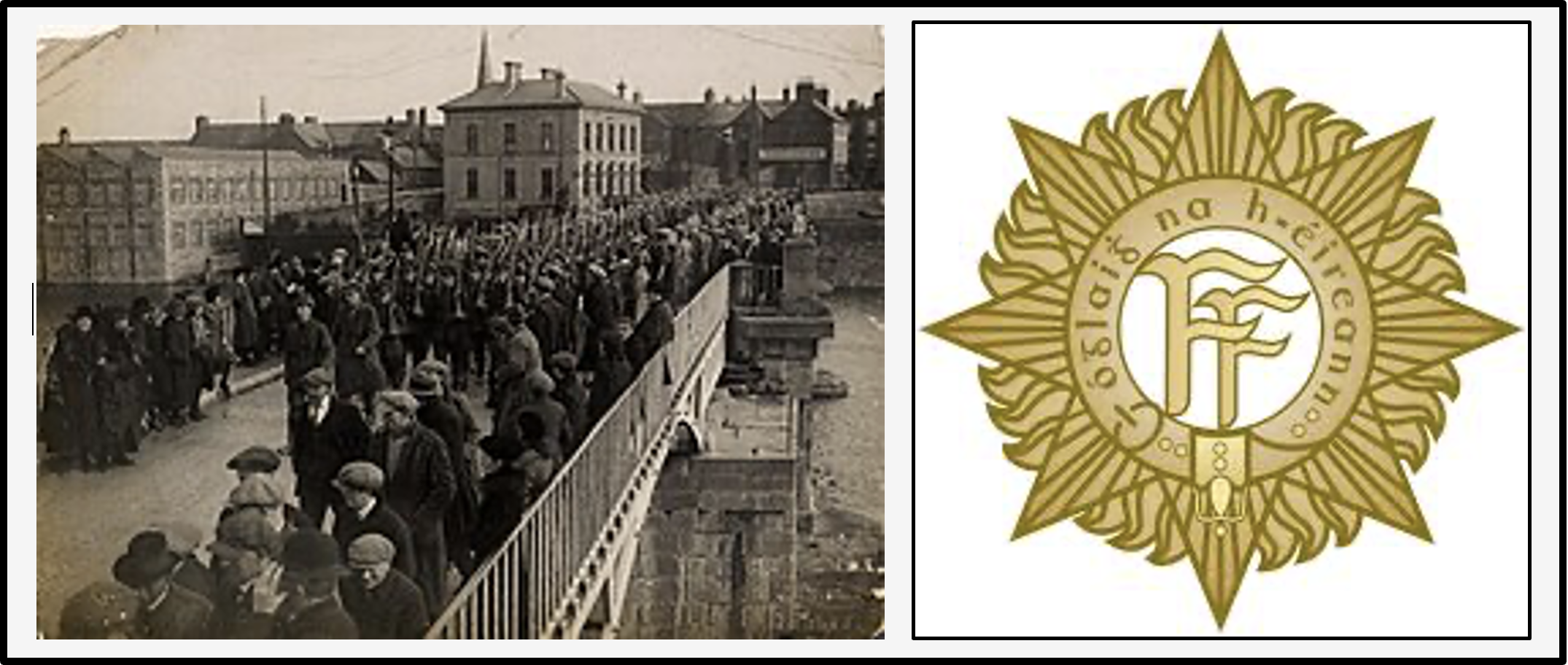
1922 photograph of Irish soldiers marching across Athlone Bridge on route to occupy Custume Barracks & the badge of the Irish Free State Army.